THE POOR OF THE WORLD CHOKING ON RUBBISH DISCARDED.
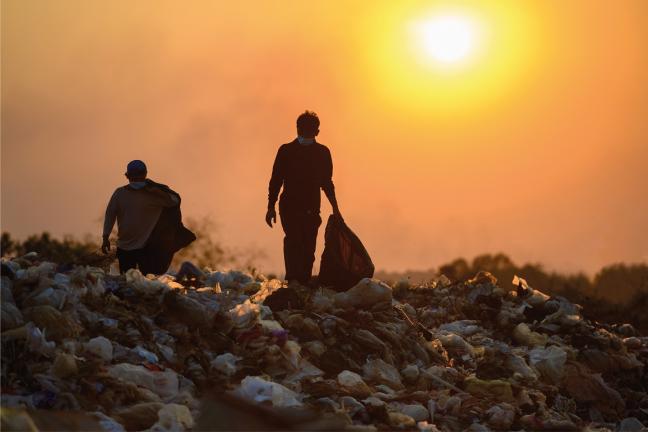
According to the data from Kayrros, an environmental intelligence agency, Ghazipur, Bhalswa and Okhla suburbs of Delhi have been home to at least 124 methane “super emitter” leaks since 2020. Due to the widespread culture of cooking using fresh produce, an unusually high proportion of the waste generated in India is “wet waste”, such as food scraps and vegetable peelings. More than 50% of the rubbish dumped daily in Ghazipur, Bhalswa and Okhla is biodegradable. With no strictly implemented system of rubbish segregation in Delhi – a city of 32 million people – the wet waste is mostly unsegregated and left to rot. As it decomposes, it generates huge amounts of methane. At the Ghazipur, Bhalswa and Okhla sites, there is no system of gas capture, a method commonly used in developed countries, meaning the methane is free to rise into the atmosphere. “Delhi has very poor waste segregation levels, especially for wet waste,” said Bharati Chaturvedi, founder and director of the Chintan environmental research and action group, which works on sustainable waste management issues in India. “As soon as it ends up on a landfill, the municipality is stuck: there’s nothing that can be done to stop it producing methane, which then causes all these fires and pollution.” Multiply this by thousands of cities worldwide on all continents where similar waste mismanagement takes place then the problem becomes colossal.