NOT ONLY THE THIRD WORLD FACING DROUGHT IT IS NOW HITTING EVERYWHERE.
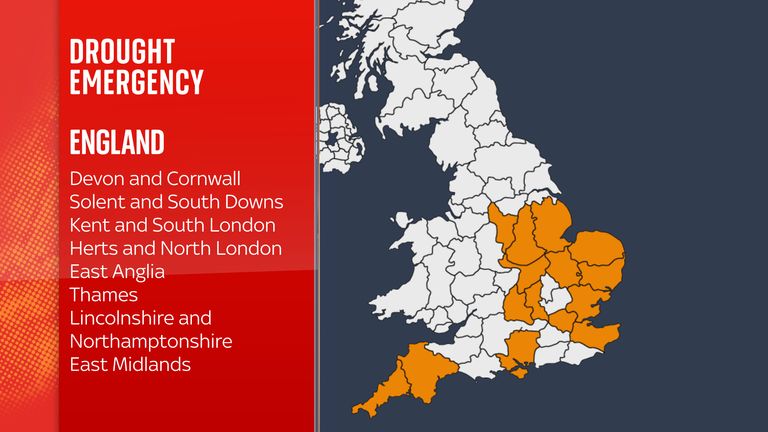
The UK’s average annual rainfall is about 1,100mm, compared with less than 300mm in Pakistan or double figures in Egypt. However, despite winter storms, significant parts of the UK are staring down the barrel of empty water butts. Much of that four-figure rainfall average is propped up by the rainy Highlands of Scotland, Wales and northern England. In south-east England, the average annual rainfall lingers about 600 mm – comparable with Lebanon or Kenya, and drier than Sydney, Australia. This also happens to be the UK’s most populated area, with about 18 million inhabitants packed into just 19,000 sq km, including London’s 1,500 sq km. And it’s drying up, fast. Government figures show that, in England, 28% of groundwater aquifers, the layers of porous sand and rock that hold water underground, and up to 18% of rivers and reservoirs, have more water taken out than is put back in. This is clearly unsustainable. Not a single one of England’s rivers is classified as being in good ecological health – this includes chalk streams, a delicate habitat almost entirely unique to England. However, much of the public remains oblivious to a problem that we are all, at least in part, responsible for causing. More than half of the freshwater abstracted in the UK is for household use. The average British resident happily uses 153l of water a day, through showers, toilets, dishwashers, washing machines and garden hoses. Yet climate-change projections show that dry summers in England will increase by up to 50%, with the amount of water available reduced by at least 10-15%. Freshwater shortages, once considered a local issue, are increasingly a global risk. In every annual risk report since 2012, the World Economic Forum has included water crisis as one of the top-five risks to the global economy. Half of the global population – almost 4 billion people – live in areas with severe water scarcity for at least one month of the year, while half a billion people face severe water scarcity all year round. Governments still spend ten times more on weapons than the environment and would rather have a fighter jet than a reservoir.