
OCEAN CLEANUP ARE AT THE FRONT END OF SAVING THE PLANET.
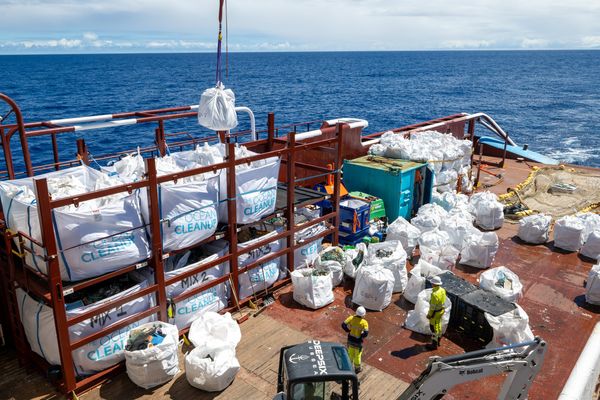
The Great Pacific Garbage Patch is a high concentration of plastic waste, chemical sludge and other dumped debris between Hawaii and California. It was discovered towards the end of 1980s at the convergence of currents known as the North Pacific Gyre. Humanity’s impact on the planet is becoming ever more apparent. We’re doing long-term damage to delicate ecosystems and wildlife, and reducing the overall stability of our environment. We’ve had a such a huge impact on the planet that we have entered a new geological epoch, the Anthropocene. It dates from the world’s first nuclear test in 1945, and is characterised by tarmac roads, plastic sedimentation and melting ice caps. Plastic has become increasingly pervasive over the last 70 years. Efforts and policies to promote, enable and enforce recycling and deter dumping have been insufficient. As a result, the patch has grown incredibly quickly. It’s now over three times as large as France and is estimated to include 1.8 trillion pieces of plastic. It poses a huge threat to local marine and atoll ecosystems. The Ocean Cleanup is one of the organisations involved in this gargantuan task. Over the past few years, it’s spearheaded a campaign to clean up plastic waste. Since its inception in 2013 by 18-year-old Boyan Slat, The Ocean Cleanup has built a team of over 80 technicians and engineers who have worked on various solutions to clear the surface plastic from the North Pacific Gyre. They tried various conventional techniques, including net-dragging, but soon realised that these were expensive and ineffective. What they eventually came up with is an intelligent, passive collection system. A curved, floating 600m-long tube with a dragging anchor is deployed in the gyre. Plastic slowly collects at its centre point, where it can be picked up by ships and taken back to land for recycling. The tube broke apart during its first stint in the Pacific but has now been relaunched. The ultimate aim is to deploy 60 of them in the North Pacific Gyre. And it’s hoped that many more can be used in gyres around the world, before more plastic is allowed to photodegrade. The untethered barriers are designed to be moved by the same currents as the surface plastic but at a faster rate as helped by the wind. They collect pieces of plastic as small as 1cm in diameter right up to large “ghost nets”, which can be tens of metres wide. The Ocean Cleanup hopes that their systems will be able to clean up half of the plastic in the Great Pacific Garbage Patch in five years. Engineering doesn’t always need to be complicated. Trial and error, innovative thinking and hard work are the best ways to achieve the best design. This incredible effort should be funded by the fossil companies as their profits have caused this problem in the first place. Instead of GOPs every year where hot air is the main result governments should regulate that sterling work such as Ocean Cleanup take preference over talk shops.


I truly appreciate this blog post.Really thank you! Awesome.